· Highland Cattle Market Staff
What Do Highland Cattle Eat? A Year-Round Feeding Guide
Pasture, hay, minerals and water: a simple, season-by-season guide to feeding Highland cattle well without overdoing the grain.
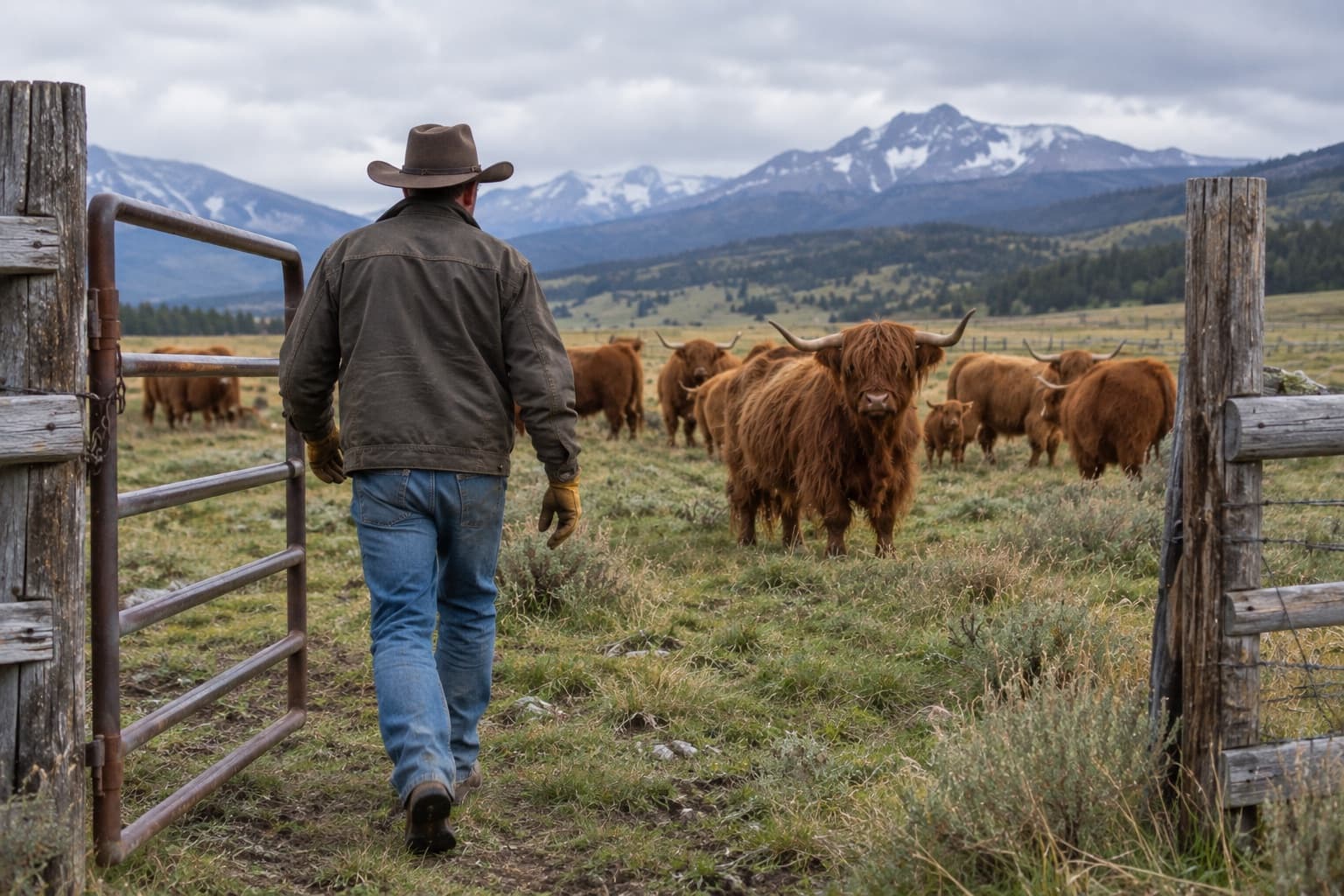
One of the best things about Highlands is how little they need. They were bred to thrive on rough grazing, and most do best on a simple, forage-based diet. Here's how to feed them through the year.
Pasture first
Grass and other forage should make up most of a Highland's diet. Highlands graze more widely than many breeds and will browse brush, weeds and coarse grasses that other cattle leave behind, which is why they're often used to clear rough ground.
Hay when the grass runs out
In winter, during drought, or on small acreage, you'll feed hay. A common rule of thumb for cattle is that they eat around 2 to 2.5 percent of their body weight in dry feed each day, so a 1,000-pound cow may eat about 20 to 25 pounds of hay daily. Good grass hay is usually all a healthy adult Highland needs.
Minerals and salt
Provide free-choice loose minerals formulated for cattle, plus salt. Mineral needs vary by region because soils differ, so ask your vet or extension office which mineral suits your area.
Water
Fresh, clean water is the most important part of the diet. Cattle drink a lot, and much more in hot weather. In winter, make sure water doesn't freeze over.
What about grain?
Most Highlands don't need grain. Too much can make them overweight, which can cause problems for breeding cows. Small amounts are useful for training, handling and loading. If you raise Highlands for beef, many owners finish them on grass, which suits the breed's slow growth. Learn more in Highland beef and uses.
Season by season
- Spring: Move animals onto new grass gradually, and keep offering hay at first to avoid digestive upsets.
- Summer: Watch water closely, and rotate pastures so grass can recover.
- Fall: Check body condition and stock up on hay before winter.
- Winter: Feed good hay daily, keep water open, and give a windbreak. Highlands handle cold well when they're well fed.
Keep an eye on condition
Run your hand along the ribs and back under that thick coat. A Highland can look well covered while actually being thin. Adjust hay up or down based on what you feel.
For a full overview of daily care, read our care and husbandry guide, or browse Highland cattle for sale.
Looking for a Highland?
Every listing shows price, registry, date of birth and location up front.
Browse Highland cattle for sale