· Highland Cattle Market Staff
How Many Acres Do You Need for Highland Cattle?
A practical look at how much land Highland cattle need, why the answer depends on your pasture, and how to stretch small acreage.
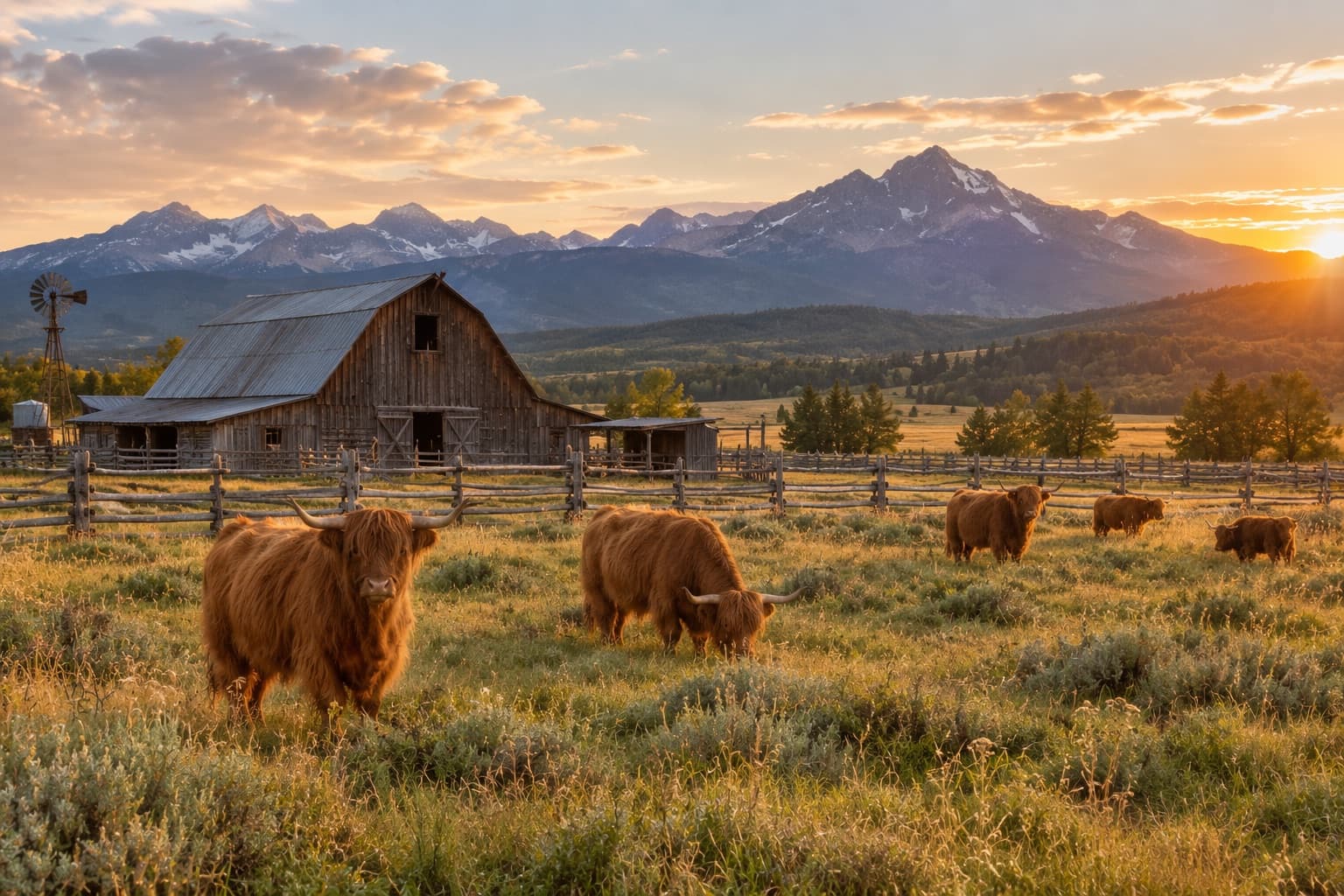
It's one of the first questions every new buyer asks, and the honest answer is that it depends on your grass. Highlands are efficient foragers that do well on rough ground, but no breed can create grass that isn't there. Here's how to think about land before you buy.
The common rule of thumb
A starting point many owners use is about 1.5 to 2 acres of good, well-managed pasture per Highland. On dry, brushy or poor ground you may need several times that, and in lush, high-rainfall areas you may get by with less.
Treat that number as a planning estimate, not a promise. Your county extension office can tell you the typical carrying capacity for pasture in your area, which is the most reliable local figure you'll find.
What changes how much land you need
- Rainfall and soil. Productive pasture in a wet climate carries far more animals than dry rangeland.
- Grass type and condition. Overgrazed or weedy pasture produces much less forage.
- Season. Few pastures grow year-round, so you'll feed hay for part of the year almost anywhere.
- Animal size. A mature cow eats more than a mini steer.
- How you graze. Rotating animals between paddocks lets grass recover and can noticeably increase how many animals the same acreage supports.
Why Highlands suit small and rough properties
Highlands were developed in the Scottish Highlands, where grazing is sparse and the weather is hard. They browse brush and coarse grasses that other breeds pass over, and they hold condition well on modest feed. That's a big reason they're popular with small landowners. You can read more about the breed's origins in our Highland cattle history guide.
Can you keep Highlands on 2 or 3 acres?
Yes, many people keep a pair of Highlands on a few acres, especially smaller-framed animals. The trade-off is that you'll buy more hay, because a small pasture runs out of grass sooner. Plan for a dry lot or sacrifice area where the animals can be fed during wet or dormant months so they don't destroy your best pasture.
Don't forget the rest of the setup
Land is only part of it. Highlands need strong fencing, constant access to clean water, shade or a windbreak, and a safe way to load and handle them. Our care and husbandry guide walks through the full setup.
If your land is ready, take a look at the Highlands available now, or read our buying guide before you start shopping.
Looking for a Highland?
Every listing shows price, registry, date of birth and location up front.
Browse Highland cattle for sale