· Highland Cattle Market Staff
Buying Highland Cattle Out of State: Transport and Paperwork
What you need to move Highland cattle across state lines: health certificates, testing, registration transfers and transport tips.
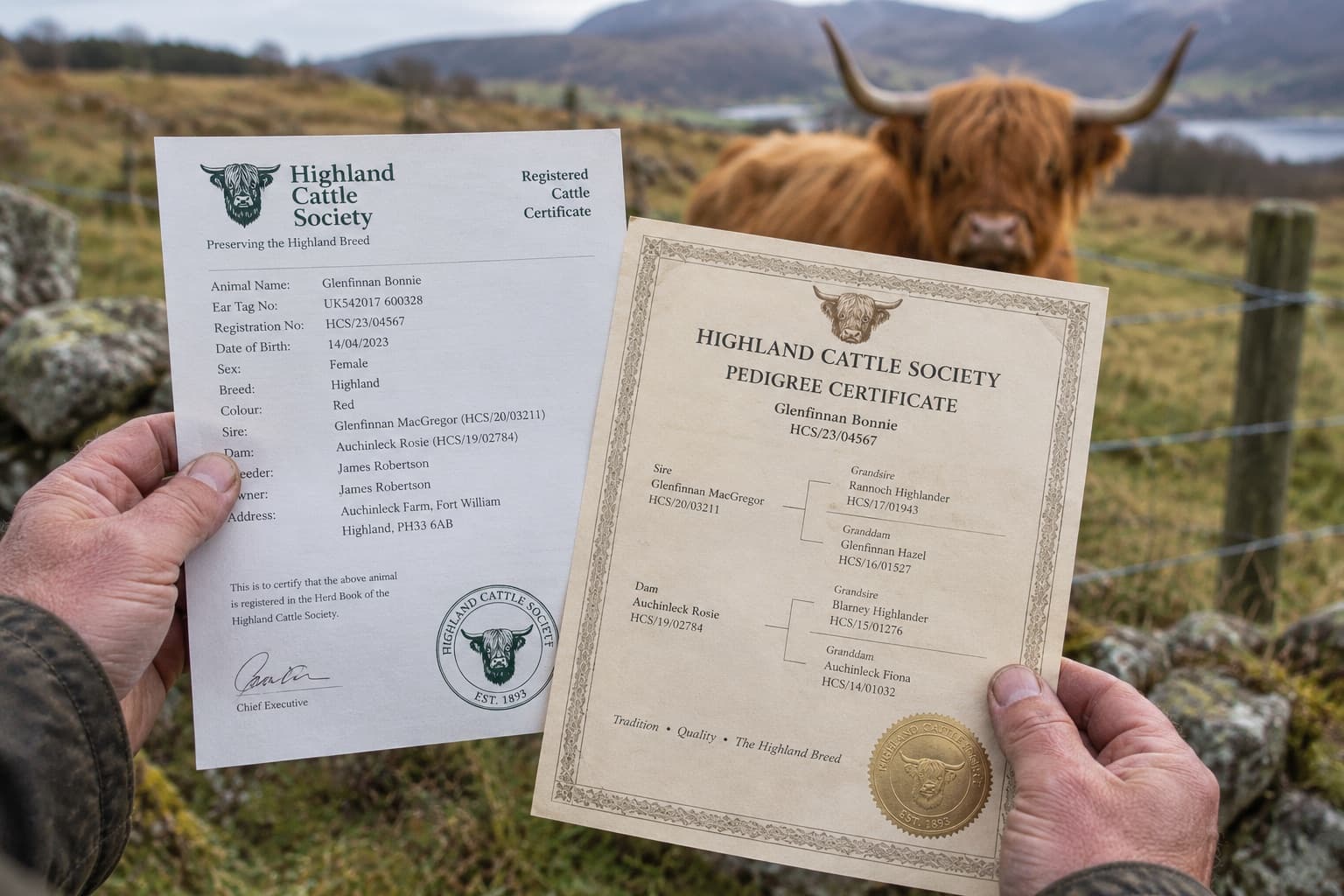
The right Highland isn't always in your state. Buying from farther away is common, but moving cattle across state lines comes with paperwork that needs to be sorted before the trailer leaves. Here's what to expect.
Health certificate (CVI)
Cattle crossing state lines generally need a Certificate of Veterinary Inspection, often called a CVI or health certificate. It's issued by an accredited veterinarian who examines the animal shortly before travel. CVIs are only valid for a limited time, so schedule the vet visit close to your pickup date.
Check the destination state's rules
Every state sets its own import requirements, and they change from time to time. Depending on the state, the animal's age and its sex, you may need specific tests, official identification such as an ear tag, or a permit number on the CVI. Bulls may need a negative trichomoniasis test in some states. Some western states also require a brand inspection.
The fastest way to get the current rules is to call the state veterinarian's office in the state where the animal is going, or ask the vet who is writing the CVI.
Registration transfer
If the animal is registered, confirm before you pay that the seller will transfer the papers into your name, and ask which registry they're with. Get a copy of the registration certificate and pedigree up front. Our registries explained guide covers AHCA, HHCA and the Highland Cattle Society.
Bill of sale
Always get a signed bill of sale that lists the animal's identification, the price, and the terms you agreed, including any deposit and when ownership transfers.
Transport options
- Haul it yourself if you have a stock trailer with enough room for horns.
- Hire a livestock hauler. Look for one with experience moving horned cattle, and ask how often the animals are checked and watered on long trips.
- Ask the seller. Many breeders offer delivery for an extra fee or know reliable haulers.
When the animal arrives
Give a new Highland a quiet pen, water, hay and time to settle before turning it out with your other cattle. Many owners keep new arrivals separate for a few weeks to watch for any signs of illness.
Our buying guide has a full pre-purchase checklist. When you're ready, browse Highland cattle for sale. Every listing shows where the animal is located.
Looking for a Highland?
Every listing shows price, registry, date of birth and location up front.
Browse Highland cattle for sale